
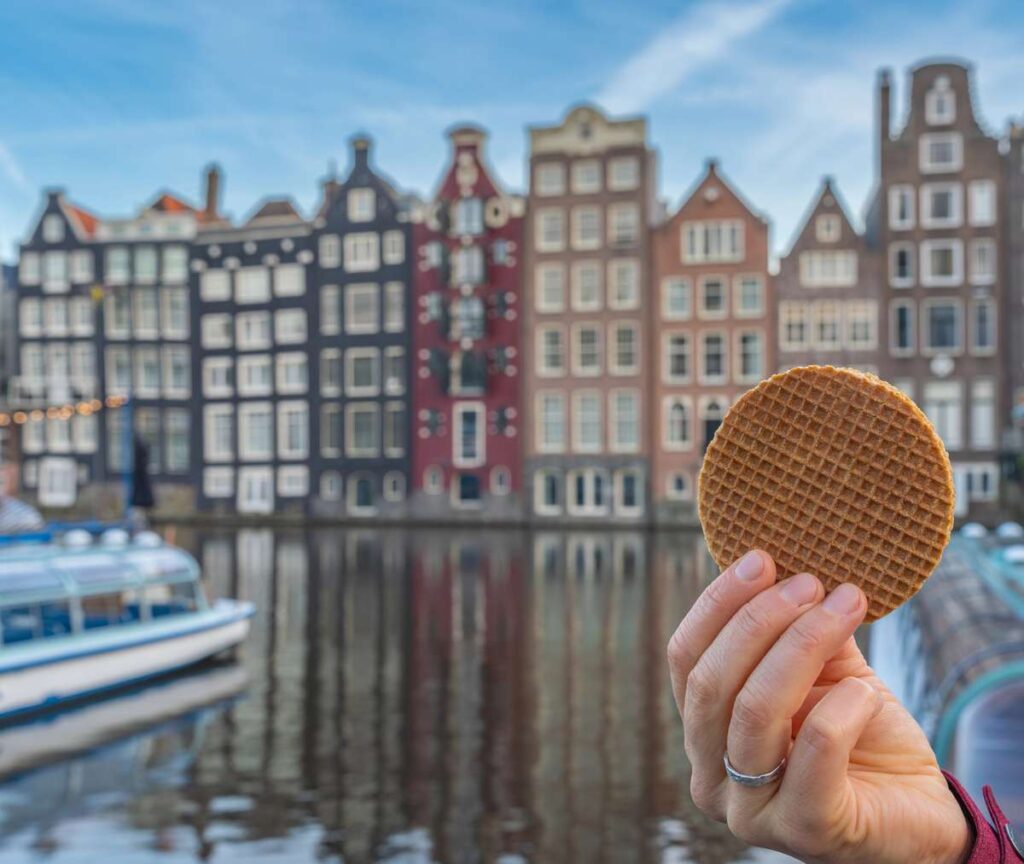
Amsterdam was one of the first places I ever visited outside North America. I was finishing up my Master’s degree at the time, and that week in the Netherlands felt like a doorway into a much bigger world.
I only spent about seven days in Amsterdam, but I loved it almost immediately. There was something about the canals, the tall narrow houses, the bicycles rushing past in every direction, and the easy mix of history and everyday life that felt completely different from anywhere I had been before.
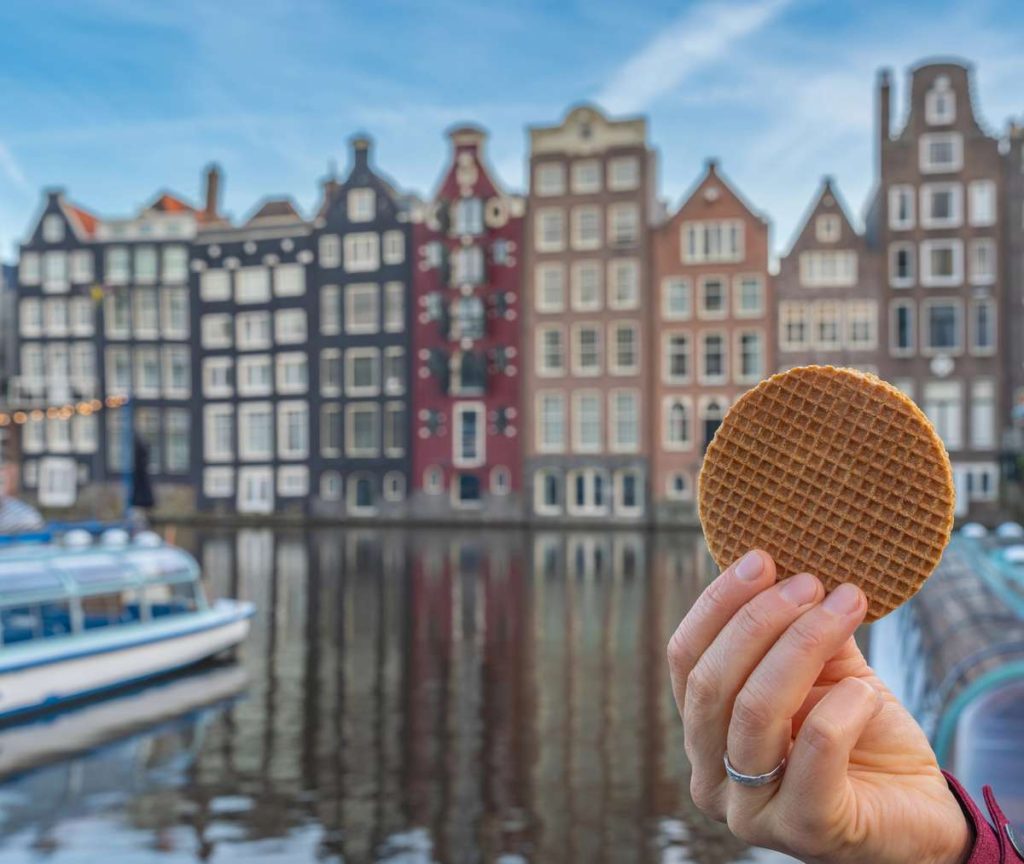
The city had a personality all its own. It was beautiful without feeling polished, energetic without feeling frantic, and wonderfully comfortable with being a little unconventional.
And then there was the food.
I still remember how much I enjoyed discovering the city through its cafés, markets, bakeries, and street food. Some travel memories fade into a general impression over time, but food has a way of bringing a place back. A smell, a texture, or a familiar taste can suddenly put you right back on a cobbled street beside an Amsterdam canal.
For many visitors, one of the sweetest introductions to Dutch food culture is the stroopwafel.
“Some tourists think Amsterdam is a city of sin, but in truth, it is a city of freedom. And in freedom, most people find sin.”
John Green, from 50 funny travel quotes
What Is a Stroopwafel?
A traditional stroopwafel is made from two thin, crisp waffle cookies joined by a layer of sweet syrup filling.
The name translates simply to syrup waffle, but that description doesn’t quite capture the experience of eating one.
The outside is lightly crisp, while the centre is soft, sticky, and rich with caramel-like flavour. When the waffle is fresh and warm, the syrup becomes wonderfully gooey. The combination is simple, comforting, and surprisingly hard to resist.
Stroopwafels originated in the Dutch city of Gouda, where bakers are believed to have begun making them in the late 18th or early 19th century. Early versions were likely made using bakery scraps and sweetened syrup, turning humble leftover ingredients into something that would eventually become one of the Netherlands’ best-known treats.
Today, you’ll find stroopwafels across the country, from grocery-store packages to freshly made versions served at markets and specialty shops.
The packaged ones can be lovely with coffee, but there’s something especially memorable about watching a stroopwafel being made and eating it while it’s still warm.

The Amsterdam Stroopwafel Experience
Food is always more interesting when you can see how it’s made.
A fresh stroopwafel begins with a small ball of dough pressed into a hot waffle iron. Once cooked, the thin waffle is carefully sliced into two layers. Warm syrup is spread across one half before the second layer is placed on top.
The whole process happens quickly, and the result is quite different from the stroopwafels many travelers may have tried from a supermarket package.
Fresh stroopwafels are softer, warmer, and more fragrant. The syrup stretches slightly as you take a bite, while the waffle still has enough crispness to keep the treat from becoming too heavy.
It’s easy to understand why visitors often seek out mellys stroopwafels while exploring central Amsterdam. A freshly made stroopwafel fits perfectly into a day of wandering beside the canals, browsing shops, and discovering the small details that give the city so much character.
It’s also an easy treat to enjoy while walking, although you may want to stop somewhere scenic and give it your full attention.
Traditional Stroopwafels and Modern Flavours
The classic stroopwafel is usually filled with a buttery syrup flavoured with brown sugar, cinnamon, or caramel notes. It’s sweet, but the thin waffle layers keep it lighter than many pastries or cakes.
Modern stroopwafel shops have taken that traditional base and added a wide variety of toppings and flavours.
Depending on where you visit, you may find stroopwafels decorated with chocolate, nuts, cookie pieces, candies, or colourful toppings. Some are elaborate enough to feel like a full dessert, while others stay close to the familiar Dutch original.
I’m often drawn to the traditional version when trying a local food for the first time. It gives you a better sense of what made the treat popular in the first place. After that, though, trying a more playful flavour is part of the fun.
That mix of old and new feels especially appropriate in Amsterdam. The city holds onto its traditions while constantly finding creative ways to reinterpret them.
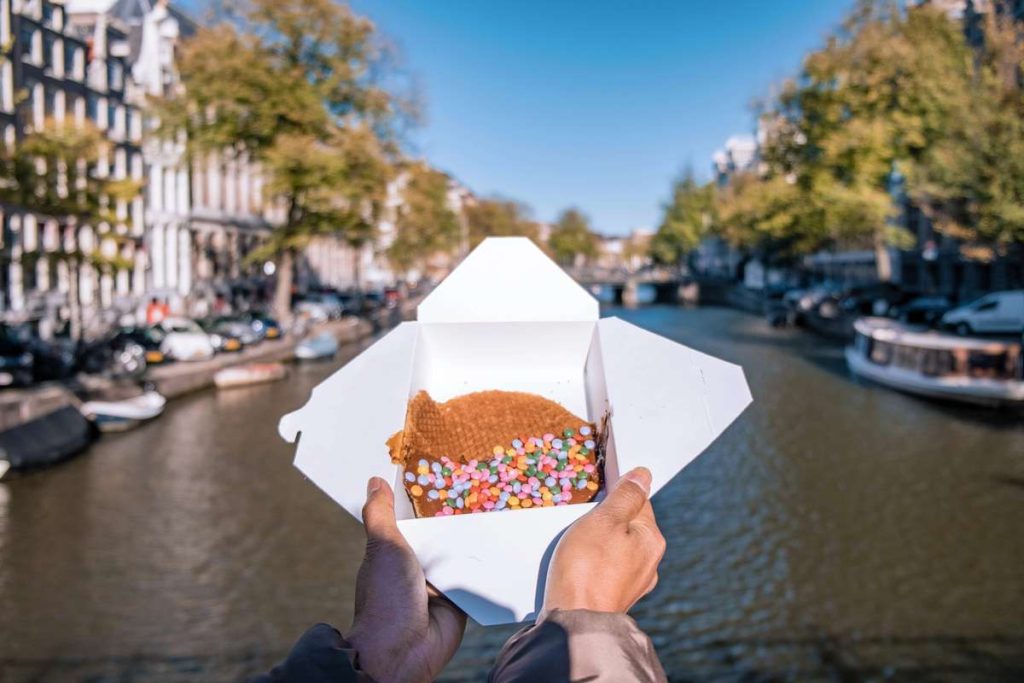
Finding the Best Stroopwafels in Amsterdam
You won’t have much trouble finding stroopwafels in Amsterdam. They appear in supermarkets, gift shops, bakeries, markets, and specialty stores throughout the city.
Quality and freshness can vary, though.
For the fullest experience, look for a shop where the waffles are made in front of you. Seeing the dough pressed, sliced, and filled gives you a much stronger connection to the food than simply picking up a sealed package.
Freshness matters because heat changes the texture of the syrup and waffle. A warm stroopwafel has a soft centre and a gently crisp edge, creating the contrast that makes the treat so satisfying.
Travelers searching for the best stroopwafels in amsterdam may also want to consider location. A central shop is easy to include between other Amsterdam sights, whether you’re spending the day visiting museums, walking through the canal district, or exploring the city’s shopping streets.
How the Dutch Enjoy Stroopwafels
One of the most popular ways to eat a stroopwafel is to place it over the top of a hot cup of coffee or tea.
The steam gently warms the waffle and softens the syrup inside. After a minute or two, the centre becomes gooey without making the outside completely soft.
To try it, choose a stroopwafel that’s slightly larger than the opening of your mug. Set it across the top, wait briefly, and then turn it over so both sides warm evenly.
It’s a small ritual, but a good one.
There’s something very European about slowing down for coffee and a sweet treat instead of treating both as fuel to consume while rushing somewhere else. Amsterdam’s cafés are perfect places to pause, watch the bicycles pass, and give your feet a break after walking along the canals.
Of course, a freshly made stroopwafel doesn’t need any help from a warm drink. It’s best eaten right away, while the filling is still soft from the iron.
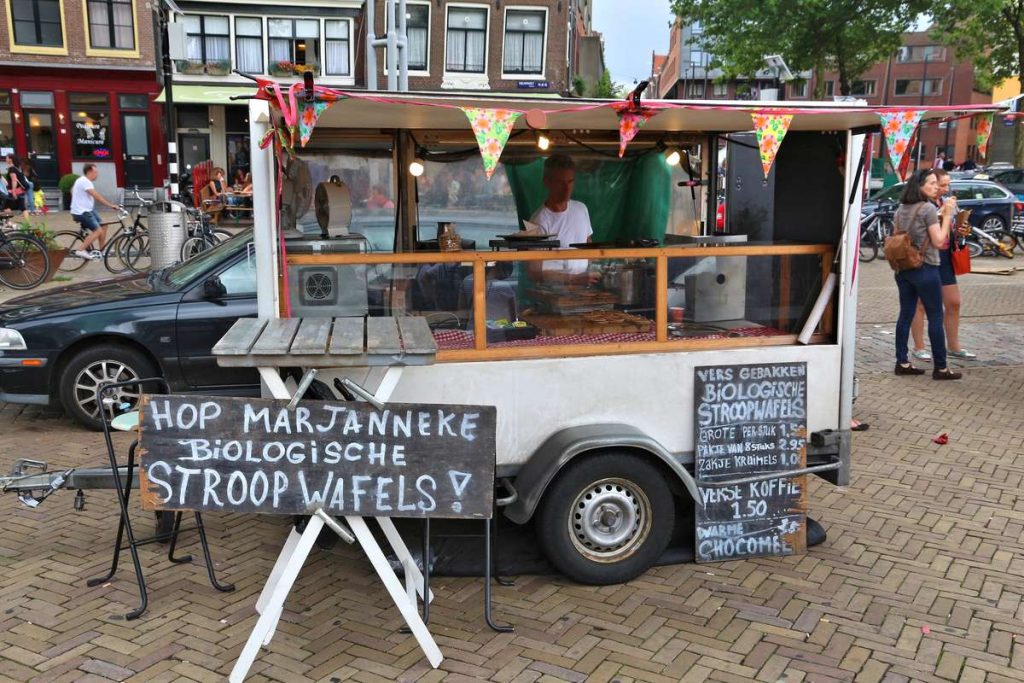
Stroopwafels as a Taste of Amsterdam
Amsterdam has no shortage of famous sights. Visitors come for the Rijksmuseum, the Anne Frank House, canal cruises, historic neighbourhoods, and the city’s lively cultural scene.
Yet some of the travel moments that stay with us longest are much smaller.
They’re the moments when we sit beside a canal with something delicious in our hands. They’re the sounds of bicycles ringing their bells behind us, the smell of coffee drifting from a café, or the surprise of discovering a local food we hadn’t expected to love.
That’s what stroopwafels offer.
They’re inexpensive, easy to find, and deeply connected to Dutch food culture. You don’t need a reservation, a guide, or an elaborate plan. You simply need to find a good one, preferably fresh, and enjoy it.
For me, Amsterdam will always be connected to that first feeling of discovering how different and exciting the world could be. I was there for only a week, but the city’s unique vibe, beautiful streets, and memorable food stayed with me.
A warm stroopwafel may be a small part of an Amsterdam trip, but it captures something special about the city. It’s traditional, creative, welcoming, and just a little indulgent.
And sometimes, those small, sweet experiences are exactly what we remember most.